
Every youth in foster care deserves equal and equitable care, regardless of their sexual orientation or gender identity.
Why it matters
LGBTQ2S+ youth often encounter discriminatory and inequitable treatment in the foster care system simply due to their sexual orientation or gender identity. Improved policies and practices are not just important, but essential, and are most effective when led by LGBTQ2S+ LEx Leaders who have firsthand experience within the system. These targeted improvements serve to provide queer identifying youth with the specific support and protection they rightfully deserve.
Quick Facts
- Approximately 30% of youth in foster care identify as LGBTQ+, compared to 11.2% of youth not in foster care. (Children's Rights)
- 44% of LGBTQ+ youth in in foster care report they were removed, ran away, or were thrown out of their homes due to their sexual orientation or gender identity. (Children's Rights)
- LGBTQ+ youth in foster care are more likely to experience discrimination, multiple placements, and placement in group homes compared to their non-LGBTQ+ peers. (HRC)
- LGBTQ youth who have been in foster care are nearly three times more likely to attempt suicide compared to those who have not been in foster care. (Trevor Project)
“Stopping youth from the ability to be in a loving family kind of defeats the purpose of why we have a foster care system.”
— Daysha Reed, They/Them, Spent time in the Michigan foster care system
Tools You Can Use
- Learn the Basics: Build your understanding of LGBTQ2S+ issues in foster care with FosterClub's Supporting LGBTQ2S+ Youth in Foster Care Training.
- Support LGBTQ2S+ Youth: Access affirming resources for caregivers and professionals through the National SOGIE Center and the Guide for Foster Parents.
- Understand the Data: Learn why collecting SOGIE data matters and how it improves outcomes for LGBTQ2S+ youth in care.
- Create Affirming Environments: Learn strategies for building supportive communities and child welfare systems for LGBTQ2S+ youth through this resource from the Center for the Study of Social Policy.
How we're working on this issue

Speaking with Federal Officials About SOGI Data Collection
LGBTQ2S+ FosterClub LEx leaders often meet with federal officials to discuss their experiences related to sexual orientation and gender identity (SOGI) while in foster care. Conversations range from whether youth feel safe disclosing their SOGI, to the impact of coming out during their time in foster care.
Read more about this work here.

Advocate for Laws to Fight Discrimination by Agencies
FosterClub's LEx Leaders work with a coalition of national organizations to protect LGBTQ2S+ youth and families in foster care. When a new federal rule was proposed to prevent discrimination by federal agencies, LEx Leaders shared their experiences to show why these protections matter for LGBTQ2S+ youth in care.
Read more about this work here.

Contributing to Government Reports
FosterClub's Lived Experience (LEx) Leaders worked with the Government Accountability Office to share their foster care experiences, focusing on LGBTQ2S+ identity and religious background. Their stories helped shape a report with recommendations for how states can better support LGBTQ2S+ youth.
Read more about this work here.
"We need to make sure LGBTQIA2S+ youth are represented and protected no matter what services they are getting and where they’re at."
— Keona Rose, She/Her, Spent time in Arizona foster care system
Want to Learn More?
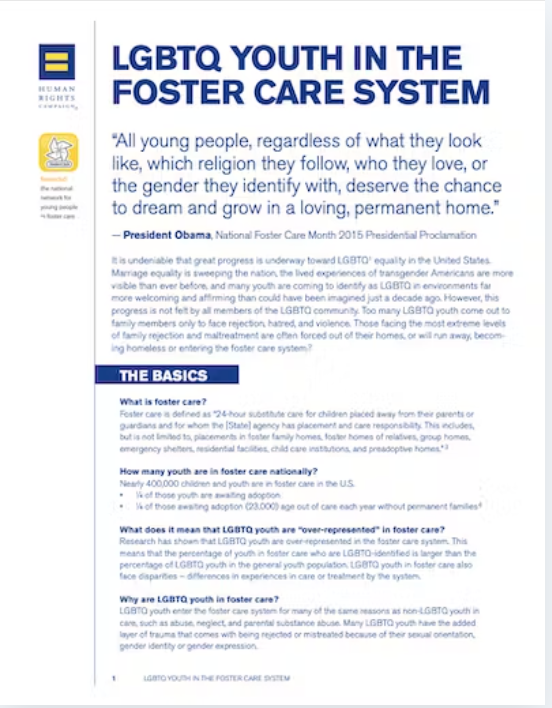
LGBTQ2S+ Youth in the Foster Care System from Human Rights Campaign and FosterClub
LGBTQ in Child Welfare from the Annie E. Casey Foundation
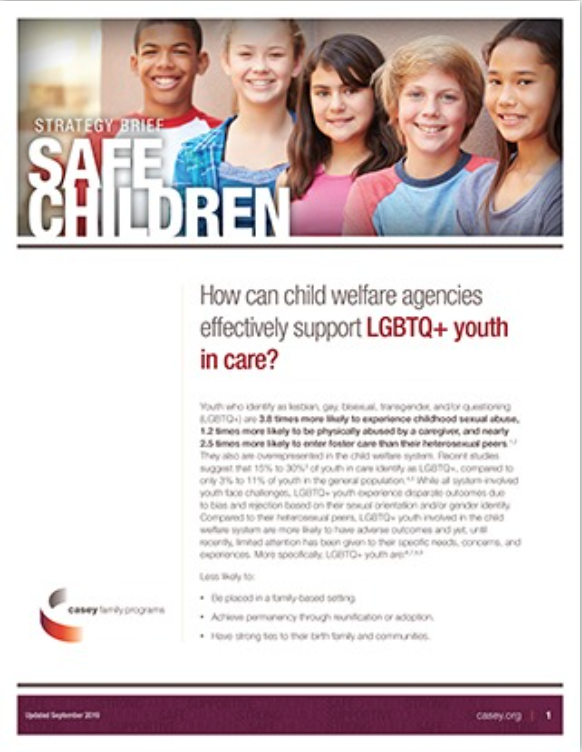
How can child welfare agencies effectively support LGBTQ+ youth in care? from Casey family Programs
Blogs on LGBTQ2S+ Youth
Supporting LGBTQ2S+ Youth in Congregate Care
"It was hard to express how I felt, or even be honest who I was. Everyone made jokes about homosexuals." -- former foster youth LGBTQ2S+ youth in foster care are at an increased risk of being placed in group homes or congregate care. TL:DR-- How to support LGBTQ2S+ youth in congregate care settings: LGBTQ2S+ youth in congregate care are at...
Policy Corner: How the Family First Act Impacts LGBTQIA2S+ Youth in Foster Care (Congregate Care Edition)
What is the Family First Act (FFA)? A bi-partisan law that was supported by FosterClub's lived experience leaders Passed in 2018, FFA included historic reforms that focus on keeping children safely with their families, when possible FFA achieved the following 1 Funding prevention services Providing support for kinship (relative) caregivers Establishing requirements for placement in residential treatment programs (congregate care)...
Supporting System-Involved Black LGBTQIA2S+ Youth and their Families
Black youth and youth who are LGBTQIA2S+ are both overrepresented in the foster care system, and Black families on average experience higher levels of involvement in the child welfare system than White families. Here are a few recommendations for child welfare professionals to aid them in supporting Black families and Black LGBTQIA2S+ youth. Advocate for policies and practices to support...
Practice Improvement Suggestions to Support Black LGBTQIA2S+ Youth in Foster Care
Black youth and youth who are LGBTQIA2S+ are both overrepresented in the foster care system. For youth who identify as both Black and LGBTQIA2S+, managing this intersection* of marginalized identities in the child welfare system can be difficult, and can result in negative outcomes including mental health challenges, housing and placement instability, and barriers to positive permanency. To help avoid...
Practice Improvement: Inclusive Language
Some agencies and organizations are encouraging the use of inclusive language in their spaces. But what is inclusive language and how do you use it? Keep reading to find out! What is Inclusive Language? Language that avoids certain expressions or words that exclude a particular group of people. Inclusive Language is meant to be inclusive to all aspects of a...
Policy Corner: Gender Affirming Care
In recent years, there’s been an influx in conversations around Gender Affirming Care. As some activists fight to ensure all youth have access to Gender Affirming Care, some states work to end access to Gender Affirming Care. Yet, many people may not know what Gender Affirming Care is or how it impacts LGBTQIA2S+ youth in foster care. We’re here to...
This work is supported by: